Latest News


Two decades later, Ce’Cile reflects on ‘changes’
November 24, 2021


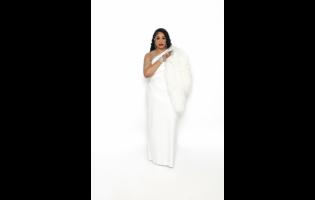
In THE STAR's September 8, 2000 publication, recording artiste and producer Ce'Cile shared the inspiration for what was dancehall's first time hearing a woman question the sexual competences of 23 men in the industry.
Her song, Changez, produced by Cornel 'Skatta' Burrell, was a hit that year and she became a household name, using humour to explain why she had no interest in having sexual relations with her male peers. It earned Ce'Cile her first and second features in the publication, though the artiste says she does not remember.
"I have a horrible memory. Sometimes I forget some of my songs if I don't sing them, but media as a whole has been important in the career. Basically, coming up as an artiste, one of the things you long for is your song to be played on the radio and your name to be mentioned in a popular newspaper, which, for the longest time, THE STAR was it," Ce'Cile said.
"Being in the business for a long time, it still matters. It is important even more so now in this digital age, how we are portrayed in the newspaper. I don't like when it gets too mix up because I hold the brand in such high esteem, but we understand the changes, and the changes in the way how people think and in what they want to see. It has been one of the components in an artiste's career, both emerging and established," she added.
Two years after receiving her breakthrough, Ce'Cile snatched the award for STAR Female Artiste of the Year. Looking at the photo as the only female sitting with male artistes like TOK, Beres Hammond and Elephant Man, who did the counteraction to Changez, she said, "When I relive that moment, I realise what a big deal it was to be the actual newspaper publication."
"As I'm thinking, 'My, how we have come a long way', I am seeing that Spice got nominated for a Grammy Award, along with Etana for Best Reggae Album. In everything now there is a fair share of women being included, and I love it," Ce'Cile said. "Back then, I was also wearing my natural hair, which was orange and red at one point. That had more of an influence on fans, more so than it being in its natural state where people used to say they wanted the 'Ce'Cile hair colour'."
The Hot Like We singer-songwriter expressed that the few female artistes who emerged back then would have had to do something daring to get on a cover. She commended the way that sections like STAR of the Month, for established acts, and STAR on t he Rise, for aspiring acts, are presented, stating that these were well-needed upgrades.
"One time unuh not even did have artistes to pick, choose and refuse from. When I came in, it was Lady Saw leading. I think it is easier for the journalist to find stories present day. Looking at this year alone, I am sure THE STAR has mentioned or featured over 30 on-the-rise individuals, and out of that, a top crop of female artistes can be discovered writing, recording, and are potential leaders, holding their own as women in this industry," she said.
The entertainer said that it is no longer a male-dominated field in terms of front runners, but she wished for a better balance.
"I'd love to see more articles based on leadership and humanitarian efforts of our personalities. A lot of women want that; to show younger girls this side of their favourite artiste exists, and [there is] too much of the over-sexualising of our women," she said.
"Happy 70th to THE STAR. It has truly been a journey of building the culture, the artistes, and we appreciate you guys. We appreciate seeing a lot more females on the job as well, so congrats and wishing you 70 more," Ce'Cile continued.