Latest News


‘Don’t let it throw you down’ - Breast cancer fighter tells others to keep fighting
October 05, 2020
STAR Writer
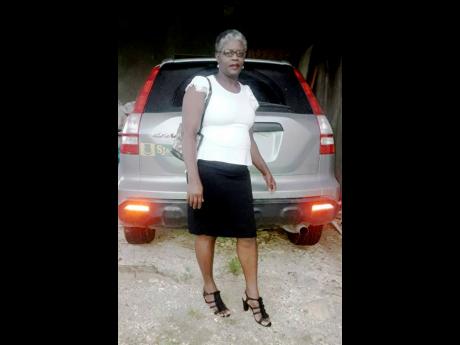
Two years ago, 53-year-old Dianne Edwards-Lewis lost what was one of the most unique features of her body as a woman - her breast. In May 2018, the woman found out she had breast cancer after feeling a lump in her left breast. By December, she had to do a mastectomy to remove the breast in order to curtail the spread of the cancer.
"My doctor was always telling me to go and do a mammogram. I was always telling 'soon', and he gave me a breast examination in May 2018, and he said he didn't detect anything. But in about August, I started feeling a lump in my left breast and I said I'm really going to have to do this mammogram," Edwards-Lewis told THE STAR.
She did both a mammogram and an ultrasound in August, and she got a letter to return to her doctor. Her doctor then advised her to do a needle biopsy, which she did in September.
"When I did it, the results took about a month to come back and when it did, the doctor said it's cancerous. At that time, I started to cry. And he said we have to remove the breast. I wasn't crying because he said that ... I was crying because I have cancer," she said.
"It's like he was saying we could remove the breast next week. That really shook me up because so soon ... him not even give me no chance to make it sink in. So, I went to two other doctors just to hear what they would say."
Remove the breast
However, both doctors told her the same thing. So, in December, she went on to remove the breast.
"I did the mastectomy in December and that was it. The doctor told me I would need four doses of chemotherapy. Once per month for four months. And I started to cry again. I heard all of these stories about what chemo does, what radiation does and what cancer does. And I've seen what cancer does," she related.
She says this took a toll on her family.
"My big son ... wow! He had it. My other children ... some of them were just silent. Just silence. No words. My mom, she cried because her mother died from cervical cancer. She cried."
Approximately 300 women die every year from breast cancer. The mortality rate is over 18 per 100,000 women. Breast cancer is the leading cause of deaths due to cancer in Jamaican women. October is celebrated worldwide as Breast Cancer Awareness Month.
Edwards-Lewis, relating her journey, said that she had a strong support system nonetheless.
"A lot of friends helped me cash-wise. They sent money from different countries. They sent money so I could do the surgery."
After she completed chemotherapy at the Kingston Public Hospital, she was sent to another department to do radiation. She described this as heartbreaking.
"When I went to that department, I thought the doctor said I didn't need radiation, and I had tears of joy. But when I went back for my second visit, they said 'no, you need radiation!' And I realised I didn't understand what the doctor said ... He is from a different country and his English was not so clear."
But clarity and understanding brought fear and disappointment.
"I started crying again. I really thought I wasn't going to do any radiation. When I was crying, a doctor came over to me, looked at my documents and said 'you have a chance of recovering fully'. You don't know what those words did to me," she recalled, as she broke down in tears.
Edwards-Williams did three weeks of radiation at St Joseph's Hospital and Medical Centre.
"Thank God," she said with a trembling voice. "From I have the cancer, I never sick one day. Thank you God, every day I go through everything smoothly. To anybody that has cancer, don't let it throw you down. It's a wicked thing, but don't let it throw you down. Just try and fight it," she encouraged other cancer patients.
Warning signs for breast cancer
* A painless lump or thickening in or near the breast or in the underarm that persists throughout the menstrual cycle
* A change in the size, shape or contour of the breast
* A bloodstained or clear fluid discharge from the nipple
* A change in the feel or appearance of the skin on the breast or nipple (dimpled, puckered, scaly or inflamed)
* Redness of the skin on the breast or nipple
* An area which is distinctly different from any other area on either breast
* A marble-like hardened area under the skin.
(Source: The National Health Fund)