Latest News


COVID-19 shots might be tweaked if variants get worse
February 15, 2021
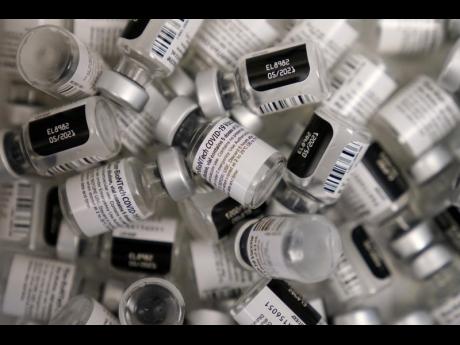
(AP) - The makers of COVID-19 vaccines are figuring out how to tweak their recipes against worrisome virus mutations — and regulators are looking to flu as a blueprint if and when the shots need an update.
“It’s not really something you can sort of flip a switch, do overnight,” cautioned Richard Webby, who directs a World Health Organization flu center from St. Jude Children’s Research Hospital.
Viruses mutate constantly and it takes just the right combination of particular mutations to escape vaccination.
But studies are raising concern that first-generation COVID-19 vaccines don’t work as well against a mutant that first emerged in South Africa as they do against other versions circulating around the world.
The good news: Many of the new COVID-19 vaccines are made with new, flexible technology that’s easy to upgrade. What’s harder: Deciding if the virus has mutated enough that it’s time to modify vaccines — and what changes to make.
“When do you pull the trigger?” asked Norman Baylor, a former Food and Drug Administration vaccine chief. “This is a moving target right now.”
The WHO and FDA are looking to the global flu vaccine system in deciding how to handle similar decisions about COVID-19 shots.
Influenza mutates much faster than the coronavirus, and flu shots have to be adjusted just about every year.
National centers around the globe collect circulating flu viruses and track how they’re evolving.
They send samples to WHO-designated labs for more sophisticated “antigenic” testing to determine vaccine strength. The WHO and regulators then agree on the year’s vaccine recipe and manufacturers get to work.
For COVID-19 vaccines, Webby said a critical step is establishing a similar surveillance and testing network to flag the mutations that matter.
Today, there’s wide geographic variability in tracking and testing mutated versions. For example, Britain does more testing of the changing viral genome than the U.S.
Three variants first discovered in Britain, South Africa and Brazil are worrisome because of combinations of mutations that make them more contagious.
On Sunday, U.S. researchers reported a still different mutation found in seven variants that have cropped up in several states.
No one yet knows if this mutation makes the virus easier to spread but the report, not yet vetted by other scientists, urges further research to find out.
COVID-19 vaccines produce antibodies that recognize the spike protein that coats the coronavirus. When the virus mutates, sometimes the spike protein is changed in key areas so the vaccine-produced antibodies have a harder time recognizing it.
The Pfizer and Moderna vaccines are made with a piece of genetic code called messenger RNA that tells the body how to make some harmless copies of the spike protein that train immune cells.
To update the vaccine, they can simply change the payload: swap out the original genetic code with mRNA for the mutated spike protein.
The AstraZeneca vaccine and the Johnson & Johnson shot expected to roll out soon are made with cold viruses engineered to sneak a spike protein gene into the body.
Adjusting their vaccines requires growing cold viruses with the mutated gene, a little more complex than the mRNA approach but not nearly as laborious as reformulating old-fashioned flu shots.
The Novavax vaccine also in final-stage testing is made with a lab-grown copy of the spike protein that also could be tweaked to match mutations.
We want to hear from you! Email us at star@gleanerjm.com and follow @thejamaicastar on Instagram and on twitter @JamaicaStar, and on Facebook: @TheJamaicaStar.