Latest News


EU regulator ‘convinced’ AstraZeneca benefit outweighs risk
March 16, 2021
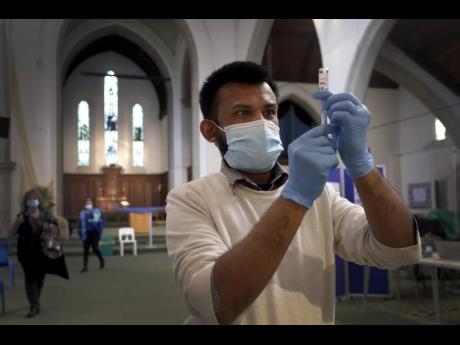
BRUSSELS (AP) — The European Union’s drug regulator insisted Tuesday that there is “no indication” the AstraZeneca vaccine causes blood clots as governments around the world faced the grimmest of dilemmas: push on with a vaccine known to save lives or suspend its use over reports of clotting in some recipients.
The European Medicines Agency urged governments not to halt use of the vaccine at a time when the pandemic is still taking thousands of lives each day.
And already there are concerns that even brief suspensions could have disastrous effects on confidence in inoculation campaigns the world over, many of which are already struggling to overcome logistical hurdles and widespread hesitancy about experimental vaccines.
“We are still firmly convinced that the benefits of the AstraZeneca vaccine in preventing COVID-19 with its associated risk of hospitalisation and death outweigh the risk of the side effects,” said Emer Cooke, the head of the agency.
Many scientists have argued that even the loss of a few days in vaccinating vulnerable people could be far costlier than the impact of any rare phenomenon.
But a cascading number of countries have taken a different view and locked away shots from the Anglo-Swedish company, awaiting the results of an EMA review, promised Thursday.
Sweden was the latest to do so Tuesday, choosing caution over speed, even as Cooke insisted “that at present there is no indication that vaccination has caused these conditions.”
Highlighting the difficulty of making such decisions at a time when people are voraciously following the ups and downs of every vaccine candidate, Sweden’s state epidemiologist Anders Tegnell said that the risk, if it existed, was rare but the country’s authorities “have felt compelled to pause AstraZeneca’s vaccine” after receiving ever more reports of blood clots.
Europe has the luxury to be able to pick from several vaccine candidates — but the decision of whether to suspend use of the vaccine is still not an easy one on the continent where the virus has already killed over half a million people, is surging again and where the vaccination campaign has repeatedly stumbled.
The choice may be even more fraught elsewhere because many countries are relying heavily on AstraZeneca, which is cheaper and easier to handle than some other shots.
The vaccine has so far played a huge role in the global initiative to ensure vaccines get to poorer countries known as COVAX.
The AstraZeneca shot has already struggled to gain public trust after troubles with reporting of its data and concerns about its effectiveness in older people.
The current debate could further erode confidence in the vaccine — and that skepticism could even spread to others.
The EMA chief noted that thousands of people across the EU develop blood clots every year for a variety of reasons and that there were no reports of increased clotting incidents in the clinical studies of the AstraZeneca vaccine.
Still, experts would undertake a “very rigorous analysis” and make a recommendation Thursday.
In addition to the EMA, AstraZeneca and the WHO have said there is no evidence the vaccine carries an increased risk of blood clots.
There have been 37 reports of blood clots among the more than 17 million people who have received the vaccine across the EU and Britain, the company said.
“This is much lower than would be expected to occur naturally in a general population of this size and is similar across other licensed COVID-19 vaccines,” the drugmaker said.
Still, the torrent of decisions casting doubt on the AstraZeneca vaccine despite assurances of experts is testing public opinion.
We want to hear from you! Email us at star@gleanerjm.com and follow @thejamaicastar on Instagram and on twitter @JamaicaStar, and on Facebook: @TheJamaicaStar.