Latest News


More people getting evicted
June 19, 2023

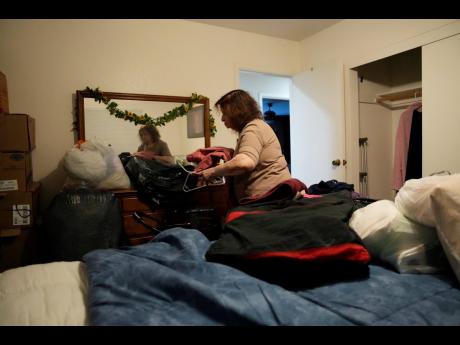
ATLANTA (AP):
Entering court using a walker, a doctor's note clutched in his hand, 70-year-old Dana Williams, who suffers from serious heart problems, hypertension and asthma, pleaded to delay eviction from his two-bedroom apartment in Atlanta.
Although sympathetic, the judge said state law required him to evict Williams and his 25-year-old daughter De'mai Williams in April because they owed US$8,348 (approximately J$1.3 million) in unpaid rent and fees on their US$940-a-month (approxmately J$144,800) apartment.
They have been living in limbo ever since.
They moved into a dilapidated Atlanta hotel room with water dripping through the bathroom ceiling, broken furniture and no refrigerator or microwave. But at US$275 a week (approximately J$42,300), it was all they could afford on Williams' US$900 (approximately J$138,680) monthly social security cheque and the US$800 (approximately J$123,270) his daughter gets biweekly from a state agency as her father's caretaker.
"I really don't want to be here by the time his birthday comes" in August, De'mai Williams said. "For his health, it's just not right."
The Williams family is among millions of tenants from New York state to Las Vegas who have been evicted or face imminent eviction.
After a lull during the pandemic, eviction filings by landlords have come roaring back, driven by rising rents and a long-running shortage of affordable housing. Most low-income tenants can no longer count on pandemic resources that had kept them housed, and many are finding it hard to recover because they haven't found steady work, or their wages haven't kept pace with the rising cost of rent, food and other necessities.
Homelessness, as a result, is rising.
"Protections have ended, the federal moratorium is obviously over, and emergency rental assistance money has dried up in most places," said Daniel Grubbs-Donovan, a research specialist at Princeton University's Eviction Lab.
"Across the country, low-income renters are in an even worse situation than before the pandemic, due to things like massive increases in rent during the pandemic, inflation and other pandemic-era-related financial difficulties."
Eviction filings are more than 50 per cent higher than the pre-pandemic average in some cities, according to the Eviction Lab, which tracks filings in nearly three dozen cities and 10 states. Landlords file around 3.6 million eviction cases every year.