Latest News


‘It is not a death sentence’ - Woman living with diabetes for more than 30 years won’t let it control her
August 24, 2023

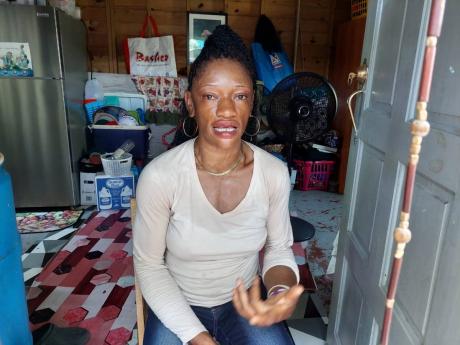
Despite living with Type 1 diabetes since she was 13, and even losing a leg due to complications of the disease, Keisha Syblis says she has a lot to smile about.
Having it under control now, the Kingston woman said she is encouraging persons struggling with the disease to maintain a balanced lifestyle.
"I take insulin three times daily, but I try my best to keep up a healthy lifestyle. You have to watch what you eat and do a lot of research, because to me, education is the best medicine for diabetes. It is not a death sentence, so don't allow it to control you. Start cooking more and let go of the fast food, and watch your weight. Diabetes and fat aren't friends. I have Type 1, which is very, very bad, but I don't allow it to hold me down," said Syblis, 44, from her Love Lane, Fletcher's Land home in Kingston.
Syblis insists that she ensures to include fruits and vegetables in her diet, as well as plenty of water. Though she eats many different types of food, she ensures that she watches her portions.
Type 1 diabetes is a chronic condition in which the pancreas makes little or no insulin. Insulin is a hormone that the body uses to allow sugar (glucose) to enter cells to produce energy. Over the past 30 years, non-communicable diseases such as diabetes have been a major cause of mortality, morbidity and economic burden in the Caribbean and Jamaica, accounting for over 56 per cent of deaths annually. According to Syblis, when she began having health issues at age 13, her mother could not figure out why.
"I used to urinate a lot and I was losing weight rapidly. I also had a lot of skin infections, so my mom took me to the doctor and she test mi and say I have diabetes. I was referred to University Hospital [of the West Indies], where I spent four months and was placed on insulin. I was just 13 and we really didn't understand what being diabetic meant," she said.
Despite the condition, Syblis said her remaining teenage years went by smoothly, but in the early 2000s, her health went downhill.
"One morning I woke up and my right big toe was just swollen and infected. It appeared that I may have stepped on a piece of hot charcoal, but I didn't feel it. I went to the hospital and they amputated it, and from that it just never heal, and then it start get mi leg," she said. "Next ting mi know, is that mi have to go lose mi left leg. I was stressed, and I cried and all sort of tings was running through my mind. I was just 37 and I didn't want to lose my foot, but I had no other choice."
Syblis said that at the time of the amputation, she lived in a one-bedroom dwelling that did not have a roof. She said she spent a few months with a good Samaritan, but eventually returned home.
"I lived alone and it was rough, because I had just lost the leg and the wound was raw and painful. I knew God would send help one day and he did send help, because some persons assist me to build a bigger and better structure," she said. Today, Syblis lives an independent life with the assistance of a prosthetic leg, which she received with help from the health ministry.
A graduate of Holy Trinity Secondary (now High), Syblis wants to become a social worker. She returned to the classroom in 2019 where she sat seven CSEC subjects, achieving grade ones and twos.
"I have English language, social studies, POB (principles of business), IT (information technology), HSB (human and social biology), integrated sciences and POA (principles of accounts). I got accepted in Excelsior Community College but I couldn't afford the school fee, but I am not going to let that stop me. I now work part-time at a counselling centre, and now doing a hospitality course at HEART," she said.