Latest News


Miriam McDonald dedicates life to coffee farming
September 26, 2024


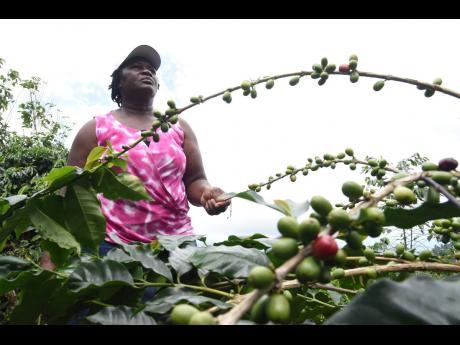
In the lush, cool hills of Mahoe, Portland, where the vibrant greenery of coffee plants stretches as far as the eye can see, 56-year-old Miriam McDonald has spent over three decades cultivating not just coffee beans, but a legacy.
As a second-generation coffee farmer since the age of 17, McDonald has witnessed the evolution of the industry, from the challenges posed by climate change to labour shortages and the threats posed by disease and pests. Yet, through it all, she remains dedicated to being a coffee farmer.
"I love everything about being a coffee farmer. I love to prune it, I love to pick it. I couldn't see myself being anything but a farmer," said McDonald, who manages a 10-acre coffee farm, while also operating two other small farms. Although coffee is the main plant that she grows, McDonald plants other crops like banana, yam, dasheen, cocoa, plantain, Irish potato, red peas and pineapple.
Typically, she spends two to three days a week on her farms, working more than 12 hours on those days, from 5:30 a.m. to 6 p.m. But during the reaping season, she is at her farms every day, ensuring that her crops receive the care they need. However, despite her love for the job, it is not without its challenges; and combating those challenges is often a difficult task, especially when it comes to sourcing fertilisers at an affordable price.
"Each plant needs about a pound, and one bag is 100lb, but sometimes we can't afford the pound. So we end up below the production level because we cannot afford the fertiliser. So we have to be using less," McDonald explained. She said that the 10-acre farm requires at least 17 bags of fertiliser to thrive, but she can currently only afford 15, which costs approximately $165,000. Ideally, she would fertilise the farm three times a year for optimal yield, but due to financial constraints, she is now only able to do so once a year.
Another challenge McDonald faces is a labour shortage. Currently, she employs only one permanent worker, but as the reaping season approaches, she will need at least 10 additional labourers.
"If I have that amount, within two days I could get off what I have up here at the top of the farm, and then I could focus lower down. But for this year, I might have some struggle because three of who I used to use [are] gone, so I'll have to start shopping around," McDonald explained, adding that a labour shortage is affecting most farmers in the area.
McDonald said that due to these issues, she sometimes operates at a loss. But despite these challenges, her passion for farming keeps her committed.
"My mother was a farmer and I grew up helping her on the farm, so farming is embedded in me. Even when the profit is not there, I just can't walk away. When I look at all that I have invested, I just can't leave it, even when the money isn't there like that," McDonald said.
"Farming has its highs and lows like any other job, but it has done a lot for me. It sent my daughter through school and it built my house. I survived on farming and it is a wonderful job, because farmers are the ones who feed the nation," she added.