Latest News


Chief Douglas fought for Maroons ’til the end - Charles Town in mourning after leader’s death
October 22, 2024
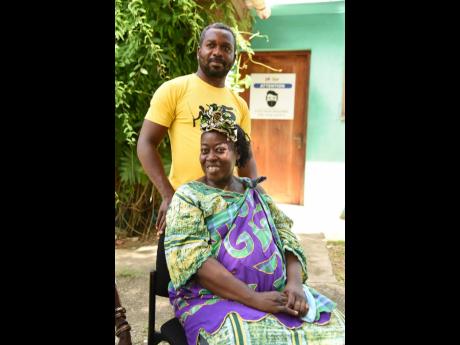
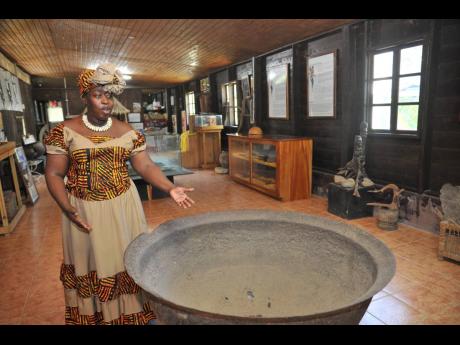

For almost a decade, Maroon Chief Marcia Douglas dedicated herself to the development and well-being of the Maroon village of Charles Town in Portland, leaving behind a legacy that stands as a powerful testament to pride and dedication.
So, with her passing last Wednesday, both her family and the entire Maroon community have been plunged into profound grief as they mourn the loss of their devoted leader.
"The whole community, everybody down. It's not good for the community right now. Not only the community [of Charles Town], but other Maroon communities, because right now I'm in Moore Town and everybody is breaking down," said Douglas' partner of more than 20 years, Captain Rodney Rose, during an interview with THE STAR.
Rose told the news team that shortly before becoming chief of Charles Town, Douglas had suffered a minor stroke. Following that, she was diagnosed with coronary heart disease, which led to angina, a condition characterised by chest pain due to reduced blood flow to the heart, which also causes shortness of breath. While on their way to participate in the annual Seville Heritage Expo at Seville Heritage Park in St Ann last week, he said Douglas began experiencing shortness of breath and passed out in the car. She was then rushed to the hospital in St Ann's Bay, where she was pronounced dead. Despite her health challenges, Rose emphasised that Douglas remained dedicated to her community even until her last breath.
"She made her mark because after the passing of Colonel Frank Lumsden, she continued the journey in developing the community. She tried to get as much income as possible and to employ as many people as possible from the community," Rose said.
"She was all about building the community. She had been working with the youths dem, doing classes with the youths dem and different stuff. It was all about the development of the community," he added.
In 2015, when Douglas was appointed chief, she made history as the first female chief since Nanny of the Maroons. Throughout her tenure, she passionately advocated for greater recognition of Jamaica's only heroine. In her last interview with THE STAR on October 8 at Charles Town's Asafu Yard and Maroon Museum, Douglas opined that more needs to be done to honour the legacy of Jamaica's national heroes because one day, National Heroes Day, is not enough.
"There is more to history than the little line that in the book," Douglas said. "From my knowledge, I know that each hero [is] affiliated with a particular parish. You should have things in those parishes based on the month they [the heroes] were born in to highlight more," Douglas said.
She also told THE STAR that she often feels disappointed when people question whether Nanny truly existed, and explained that if more Jamaicans sought to understand their history, there would be greater appreciation for the heroine's contribution to the country's freedom.
"When I hear them questioning if Nanny was real, or if Nanny was a person, if Nanny was ever there, I sometimes think they don't appreciate being victorious as a country," Douglas said.
"There were things that Nanny did that are not questionable. Sometimes, if you got that experience for yourself then you'll understand, and I think people need to know more about Nanny. [They] need to know more about the Maroons in general, and they can get to know more by visiting the Maroon communities," Douglas added.