Latest News


NEPA intensifies Rio Cobre safeguards
August 19, 2025
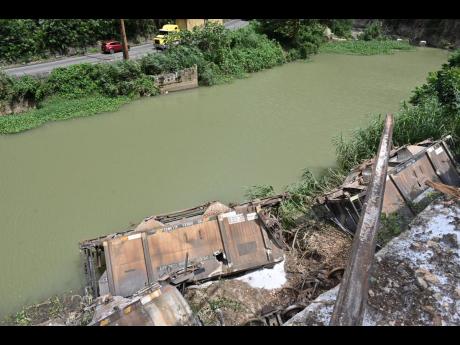
The National Environment and Planning Agency (NEPA) has been intensifying efforts to safeguard the Rio Cobre following the recent derailment of a bauxite train that resulted in the river's pollution.
NEPA's Senior Manager for Environmental Management and Conservation, Richard Nelson, says these interventions include the installation of signage and development of a community-based early warning system along the river, "supported by trained residents who can report pollution incidents directly to the agency using mobile technology".
"Our aim is to ensure that industries, small businesses, and farming communities adopt practices that protect the river, because what we do today impacts our future generations," Nelson said during a recent Jamaica Information Service (JIS) 'Think Tank'.
He noted that the Rio Cobre, "is the most important river in St Catherine", pointing out that "while it provides water for irrigation, domestic supply, recreation, and livelihoods, it is also heavily industrialised". Nelson added that while the Wastewater and Sludge Regulations (2013) permit effluent discharge into rivers once prescribed standards are met, compliance challenges and operational failures at several treatment facilities have resulted in untreated effluent entering the Rio Cobre.
"Over the years, we have seen incidents of fish kills and elevated pH levels that threaten the river's many uses. The recent train accident underscores why strong measures are needed to prevent further contamination," Nelson explained. Nelson said NEPA's efforts have also seen the agency engaging key stakeholders, including the National Irrigation Commission, the National Water Commission, the Ministry of Health and Wellness, and the Ministry of Agriculture, Fisheries and Mining, to establish a coordinated water quality monitoring programme.
Additionally, in March, NEPA established the Jamaica Coastal Area Management and River-based Unit, which is tasked with enforcing regulations, monitoring rivers and coastal areas, and working with industries and communities to prevent pollution before it occurs. Nelson further noted that the agency is actively addressing non-point sources of pollution, such as agricultural runoff and animal waste entering tributaries, by partnering with farmers to promote improved land use and animal husbandry practices.