Latest News


Ghana becomes first nation to get vaccines from COVAX
February 24, 2021
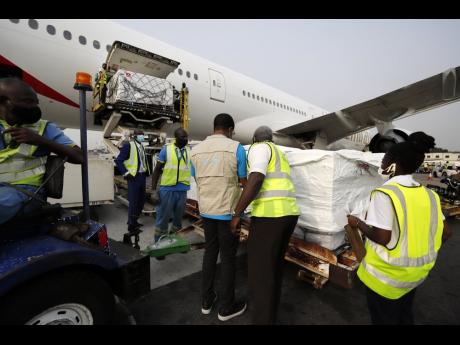
ACCRA, Ghana (AP) — Ghana received the world’s first delivery of coronavirus vaccines from the United Nations-backed COVAX initiative on Wednesday, after the long-awaited start for a program that has thus far fallen short of hopes that it would ensure shots were given quickly to the world’s most vulnerable people.
The arrival of 600,000 doses of the AstraZeneca vaccine in the West African country marks the beginning of the largest vaccine procurement and supply operation in history, according to the World Health Organization and UNICEF.
It is a linchpin of efforts to bring the pandemic to an end and has been hailed as the first time the world has delivered a highly sought-after vaccine to poor countries during an ongoing outbreak.
“Today marks the historic moment for which we have been planning and working so hard. With the first shipment of doses, we can make good on the promise of the COVAX facility to ensure people from less wealthy countries are not left behind in the race for life-saving vaccines,” said Henrietta Fore, executive director of UNICEF, which delivered the vaccines.
But the initiative, formed to ensure fair access to vaccines by low- and middle-income countries, has been hampered by the severely limited global supply of doses and logistical problems.
Although it aims to deliver 2 billion shots this year, it currently has legally binding agreements only for several hundred million shots.
It already missed its own goal of beginning vaccinations in poor countries at the same time immunisations were rolled out in rich ones.
The overall campaign thus far has been extremely uneven: 80% of the 210 million doses administered worldwide thus far were given in just 10 countries, WHO Director-General Tedros Adhanom Ghebreyesus said this week.
That delay led numerous poorer countries to rush to sign their own deals, potentially undermining COVAX’s efforts to get shots to the neediest people.
And some countries can’t afford to go it alone.
Ghana is among 92 countries that will receive vaccines for free through the initiative, which is led by the WHO; Gavi, a vaccine group; and the Coalition for Epidemic Preparedness Innovations.
Another 90 countries and eight territories have agreed to pay.
Some activists have expressed serious concern about the COVAX initiative’s goal of only giving enough shots to cover about 20% to 30% of the population in countries that receive donated doses.
They have warned that even if the program is successful in distributing those vaccines, those countries will remain vulnerable to continued coronavirus outbreaks since most experts guess that at least 70% of people will need protection from the virus to reach herd immunity.
And experts have noted that even if richer countries reach some level of herd immunity, everyone will remain vulnerable as long as there are pockets of COVID-19 anywhere in the world.
The vaccines delivered Wednesday are the first of some about 7 million doses being produced by the Serum Institute in India for some 20 countries, according to the Africa Centres for Disease Control and Prevention.
We want to hear from you! Email us at star@gleanerjm.com and follow @thejamaicastar on Instagram and on twitter @JamaicaStar, and on Facebook: @TheJamaicaStar.