Latest News


Health ministry puts personal responsibility above testing and contact tracing
March 24, 2021
Jamaica's health officials have seemingly given up on the use of mass testing and contact tracing as key tools in bringing the COVID-19 outbreak under control.
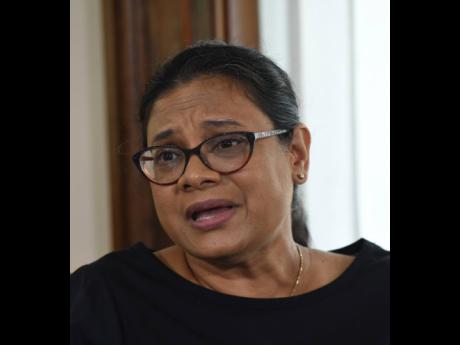
Dr Jacquiline Bisasor-McKenzie, the country's chief medical officer, said that at this stage in the outbreak, the country should not be relying on those measures to determine its public health intervention.
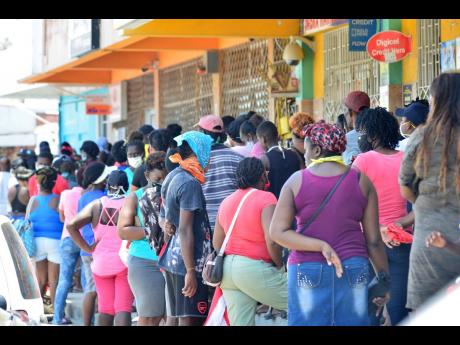
"We are doing the contact tracing, but it however, becomes more and more difficult as the numbers increase and the staff are shared between contact tracing and manning immunisation sites," she said. Jamaica declared community transmission of COVID-19 last September, which means that when someone gets the virus, there is not necessarily any known contact with a sick person.
The ideal situation
"Really and truly, at this point in the pandemic, where we are in terms of community spread, the ideal situation is that the level of knowledge, the personal responsibility should dictate to persons that they need to adhere to the restrictions," Bisasor-McKenzie said. "What we are finding, in reality, is that persons are depending on testing to drive taking precaution, so we have to continue to test because of this reason."
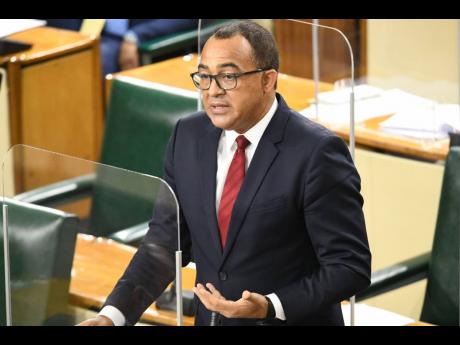
Health Minister Dr Christopher Tufton said that "When you have community spread, contact tracing becomes a real challenge". He said that more than 40 businesses in Kingston and St Andrew have outbreaks and that it was not practical to contact trace every case.
"There is a point at which further tests, or dependence and reliance on testing or contact tracing achieves diminishing returns. ... I do not accept that the solution is to contact trace and test more," he said. Bisasor-McKenzie said that regardless of whether 500 persons or or 2,000 persons are tested, the positivity rate would not change.
"We are in a sad position that it is the testing that is driving personal restrictions and, therefore, we have to maintain this high level of testing that we are trying to keep up with. The fact is that in terms of the regular surveillance in terms of our influenza-like illness and our our severe acute respiratory illnesses that we are seeing in our health centres and our hospitals, if we were just conducting surveillance and testing on these groups, we would have still gotten the positivity rate," Bisasor-McKenzie said.
Jamaica has 36,231 positive COVID-19 cases up to Monday. Four in 10 Jamaicans tested in the past few weeks have returned positive results. The country recorded 335 new cases and six deaths on Monday. There were 18,947 active cases, 433 of which represent patients who are hospitalised. Forty patients were listed as being in critical conditions and 72 were moderately ill.
Bisasor-McKenzie said that maintaining high levels of testing is "an inefficient use of resources".