Latest News


Rocky Point on alert for dengue, crocodile
October 11, 2023
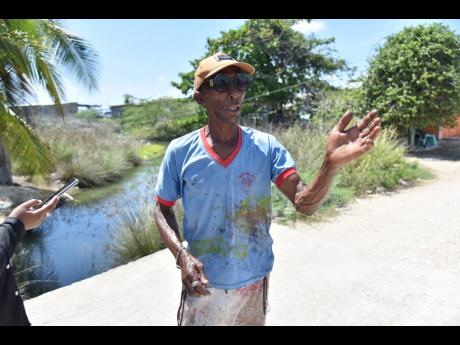
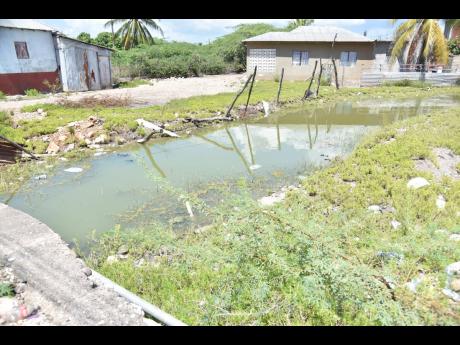
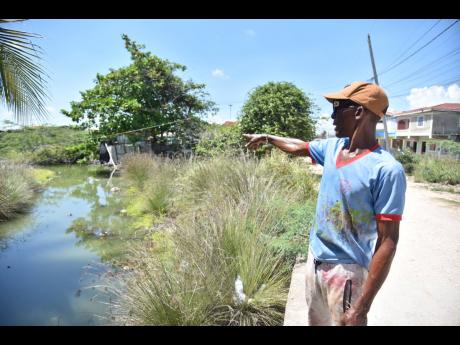
With the island currently experiencing a dengue outbreak, the residents of Key in Rocky Point, Clarendon, are now deeply concerned about a body of water they say has been stagnant for months.
Making matters worse, residents said that the water, which is now visibly a swampy green colour, has become infested with crocodiles.
"Everybody fear fi dengue right now. Wid a disease like that, yuh nuh must afi fear fi yuh life and yuh pickney dem life," said Erpha Reid, who was born and raised in Key.
Another resident, Coswell Daley, said that the mosquito population in the community is out of control, and that the fogging which is done once a week is not enough.
"Dem (the mosquitoes) ruff man, a Baygon wi afi a use. Di destroyer cah help. More time dem have all the van weh come in yah come spray to, enuh. [If] dem dweet all todeh, tomorrow night mosquito a kill wi all same way. Di one night alone nah guh work, cah dem breed up every minute," said Daley.
But the mayor of May Pen and councillor for the Rocky Point Division, Winston Maragh, said that although the area is on the fogging schedule, it is not the main focus because there are no suspected cases of dengue.
"The schedule is made up of where the cases, or suspected cases, are coming from. Presently, there are no cases coming from Rocky Point, from what the health department team told me, and so they wouldn't rush to go into Rocky Point now with the fog," Maragh said.
Daley said that residents are doing their part to try to reduce mosquito-breeding sites by throwing oil in drums and puddles of water. Maragh said that this is more effective than the fogging, because it kills the mosquito eggs before they hatch.
But the crocodiles are now a headache. Daley said that when it rains, the lack of sufficient drainage leaves plenty of water.
"In a di trench deh suh, bay alligator [crocodile] in deh, man. Suh dem gi wi problem to, enuh, 'cause dem a eat off all di animal dem 'bout yah, enuh," he said. Daley said that the trench has not been cleaned in months, and little is done to drain it regularly.
Maragh explained that usually when the sand banks up, certain residents would use their shovels to clear it.
"What happen at Key is that the gentleman who use to clean that sandbar for us died a few months ago, and nobody has decided to voluntarily clean the thing. What he used to do is voluntarily clean it and whenever we get drain-cleaning money, we would pay him. But nobody wants to wait, like what he would do," Maragh said.
He added that the reason for the stagnant water is because of the community's geography.
"The problem with Rocky Point, it's not Key alone, even down by West End ... is just similar to any other coastal community or town. What happens is that a sandbar develops at the mouth of every drain after a while because of the inflow and the outflow of the tide. So every time the tide comes in, it deposits sand at the drain mouth," he said.
The mayor said residents can call the Caribbean Coastal Area Management Foundation's office to have crocodiles captured and removed, but the reptiles are "nothing to be alarmed about".
"I always say to them enuh that the community was built in a wetland area, suh di crocodiles have been here long before us. You know that the dinosaurs and all a those guys die out, [but] crocodiles have been around from those times, because dem know how fi keep low and survive," said Maragh.
However, Maragh said that he intends to have his team visit and properly clean the trench now that drain-cleaning funds are available.