Latest News


Economist helps aspiring tertiary students fund their education
June 09, 2025
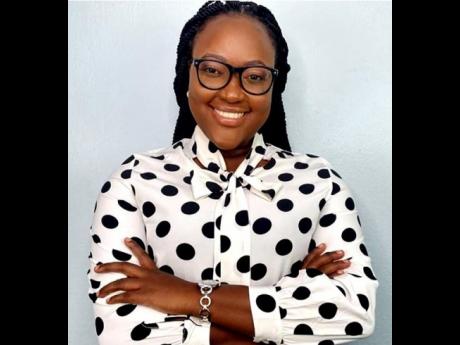

When Johnique Francis finished high school, she had one clear goal: attend university.
But coming from a single-parent home in rural St Catherine, with little to no resources, she had to put that dream on hold. For a year, she tried to see what her high school diploma and CXC subjects could do for her.
"I tried the call centre life, I tried jobs here and there," she recalled. "But the money could only cover food and bus fare. I couldn't help at home. I couldn't save anything. That's when I said, 'Alright, I'm going back to school.'" That decision would change the trajectory of her life and, years later, the lives of dozens of students she now helps access scholarships and grants. Francis, now 30, grew up in Bog Walk, the youngest of six children raised by a single mother.
"We weren't middle class. Probably lower," she said. "But there was always a push for school." Growing up in a rural community, Francis had limited exposure to opportunities, but earning a place at Ardenne High School in St Andrew introduced her to a more structured academic environment and career-focused peers, opening her eyes to new possibilities.
"Ardenne showed me that education could be an escape from poverty," she said. So having decided to go back to school, a determined Francis enrolled at The University of the West Indies, Mona, to study economics and statistics. On her first day, she didn't even have the bus fare to return home.
"I just wanted to drop out," she admitted. "But I kept going, and, somehow, everything worked out." In true Jamaican fashion, she 'tun har hand mek fashion'.
"My first year I remember selling cupcakes an June plums in my community to buy a laptop to start college. At the time it was $20,000 for a laptop," she recalled.
Funding her studies wasn't easy, but through a mix of student loans and scholarships, she completed her undergraduate degree. Later, she discovered that she could pursue a master's degree in economics, also without paying a cent, as there were many avenues to access other scholarships.
"Once I figured out how the system worked, I tapped into every opportunity," she said.
Today, as an economist and consultant, Francis' passion has grown beyond her own success. She now dedicates her time to helping other students, especially those from rural communities like hers, to gain access to scholarships so they can also because university graduates.
"I always tell people, it's not about being the brightest," she said. "I barely had a 3.0 GPA. Most scholarships just want proof that you can't afford school. A lot of people don't know these resources exist or are afraid to ask."
She initially started helping other students in 2018 after completing her master's when community members started asking how she made it.
"I was gone for five years, then suddenly I was driving a nice car," she laughed. "So, people got curious, and I was ready and willing to explain how. So, I started speaking at PTAs, schools, and career days wherever I was invited. She added that aspiring university graduates need to stop fear student loans.
"People are scared of loans, but student loan interest rates are low, and with a good plan, you can pay them back even on minimum wage. It's not the loan that's bad, it's the lack of financial literacy," she added.
Over the years, Francis has also tutored students in her community, guiding them through scholarship applications and helping them prepare for interviews. Her message is simple but powerful.
"Scholarships exist. Help exists. You just have to know where to look and believe you deserve it."