Latest News


More female farmers accessing training
October 30, 2023
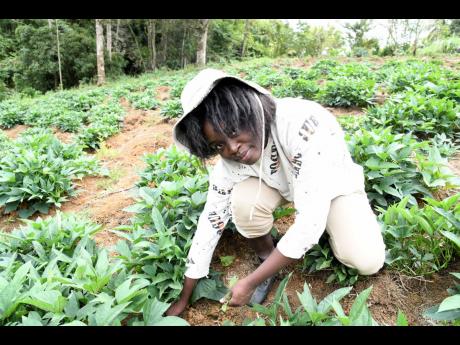
An official at the Rural Agricultural Development Authority (RADA) is bemoaning the lack of interest shown by male farmers to access training aimed at helping them to increase their productivity.
Robert Tulloch, land management officer at RADA, Kingston and St Andrew, said that, often, farmers do not take advantage of the training opportunities that exist.
"Any time you go to train farmers, if you find 10 male farmers, you find a lot. What you will find is female farmers. The last set of training I have done, I have not trained seven male farmers, but I have seen more than 20 female farmers. There are more female farmers being trained in Jamaica currently, and statistics have shown that," Tulloch said.
He was addressing a Roots and Tubers National Dialogue session under the Sustainable Agriculture in the Caribbean project at Hotel Four Seasons in St Andrew last Thursday.
The land management officer said that there is a general lack of interest among farmers in accessing training.
"I have [been to] Westmoreland and have spent money on guest houses and hotels to train farmers, and I did not train 15 farmers for three days."
Extension education specialist at RADA, Alicia Chambers, said the entity goes into communities to engage with the farmers before organising the training sessions.
"We visit the communities; we have one-on-one discussions with these farmers before we actually start to organise, implement or facilitate any sort of training activity," Chambers said.
She said that participants are allowed to bring along their children.
"Time, age and women not being able to participate is not an issue," she said, while adding that the RADA has taken gender-sensitive approaches to its agricultural training, and has also taken into consideration all vulnerable groups.
In addition to face-to-face meetings, RADA has been trying to reach farmers through online initiatives, Chambers said.
She is urging those who have benefited from the training sessions to put into practice what they have learnt, to ensure the sustainability of the process.
"After we do this type of capacity-building, farmers need to start owning the process," she charged.
Stressing the need for them to "own their own development", she said that "the options are there for the farmers to tap into".