Latest News


Financial adviser becomes full-fledged farmer
February 25, 2026

When Kayanne Cole first stepped onto farmland, she could barely handle a machete.
The 42-year-old had no background in agriculture. She had never cleared bush, never sown a crop, and never pictured herself managing acres of land.
"I knew absolutely nothing about farming," she admitted.
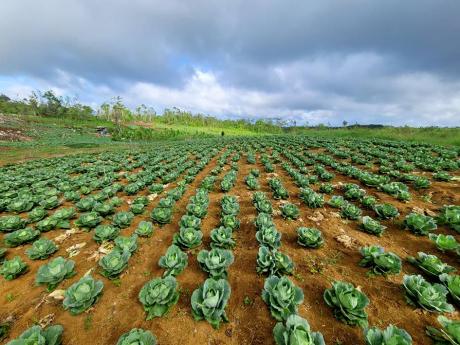
Today, just over two years later, the financial adviser and mother of two is tending more than five acres in Murphy Hill, St Ann. She is steadily establishing herself in the agricultural sector while juggling a full-time career, motherhood and the uncertainties that come with working the land.
Her introduction to farming came in 2021, at the height of the COVID-19 pandemic. During a visit to a client who farmed, something shifted.
"I saw his location, I saw his cultivation, and you know, it spoke to me. I became interested in it," she shares.
At first, she had no intention of running her own farm. Her plan was to invest in someone else's operation. But that idea soon evolved.
"Eventually, I said, 'why not try to do it myself'?" Cole said.
By 2023, she had secured land and officially launched her farming venture. What began as curiosity quickly became commitment. With mentorship and hands-on learning, she immersed herself in every aspect of the process -- from preparing the soil to managing crops -- gradually developing both skill and confidence.
"Farming teaches patience. You put a seed in the soil and you wait. It doesn't happen overnight," she points out.
Operating in a field traditionally dominated by men, she quickly confronted lingering stereotypes.
"Some people believe women only come to reap or harvest. They don't expect you to be involved in planting or to be the backbone of the operation," she said.
Determined to redefine those assumptions, she throws herself fully into the work. Her day often begins at 4:30 a.m., checking weather updates, coordinating tasks with the men who assist her, and organising the day's activities before getting her children ready for school and heading off to her primary job.
During the week, she visits the farm when necessary, particularly for harvesting. Sundays, however, are reserved.
"Sunday is farm day and farm day is family day," Cole said.
Her children accompany her from early morning, planting seedlings, running through the fields and learning firsthand how food is grown. Meals are prepared outdoors, transforming the workday into family time.
"I don't want my children to feel like Mommy is always too busy. I want them to be part of what I'm building," she reasoned.
What started as a side venture has grown into something deeply personal. Farming is no longer simply about supplementary income -- it represents security, independence and a lasting inheritance.
"Farming to me... is purpose. Basically, it is independence and it is food, security and legacy for my family - for my children and my children's children.
It is setting an example for other women," she said.
Before Hurricane Melissa swept through western Jamaica last October, she had been cultivating Scotch bonnet peppers with promising results. The storm wiped out much of the crop, dealing a heavy financial blow.
"I was nervous and scared," she admitted. "Not just for my home but for the farm. You put your money and your effort into the land, and you worry about losing it," the entrepreneur said.
The destruction forced her to regroup. She is now replanting cabbage and Irish potatoes while steadily clearing additional sections of land as labour becomes available.
Her produce is mainly sold to vendors, individual buyers, small supermarkets and local markets. But she has her sights set on broader opportunities.
"Being on the north coast, I see myself eventually supplying hotels consistently," she said. "I also hope to explore export in the future," she added.
Despite setbacks, Cole remains optimistic about what lies ahead. Within five years, she hopes to expand her acreage, purchase her own tractor and other machinery, and lessen reliance on shared equipment. She also intends to generate employment and identify one or two main crops capable of sustaining long-term growth.
She wants her story to resonate, particularly with young women contemplating agriculture.
"You can be feminine, confident and still be a farmer. Those things don't cancel each other out," she said.