Latest News


WEIRD STUFF
April 07, 2026
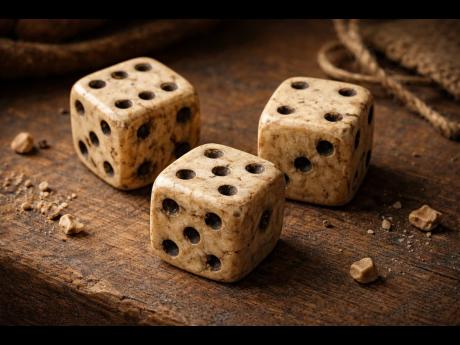
Humans have been rolling the dice for a very long time.
Experts say gambling dates back at least 12,000 years - after ancient dice made from bone were discovered in North America.
Researchers from Colorado State University uncovered the tiny two-sided dice at sites across the western Great Plains, pushing the origins of games of chance back more than 6,000 years earlier than previously thought.
The artefacts date to the end of the last Ice Age - meaning prehistoric humans may have been taking risks long before casinos existed.
The study, published in American Antiquity, identified nearly 600 probable dice from different periods of North American prehistory.
Unlike modern cubes, these were flat or slightly rounded pieces of bone, often oval or rectangular, with markings to distinguish each side - similar to heads or tails on a coin.
They were likely tossed together, with scores based on how many landed a certain way.
Researcher Robert Madden said: "Historians have traditionally treated dice and probability as Old World innovations."
But the findings tell a different story.
He added: "What the archaeological record shows is that ancient Native American groups were deliberately making objects designed to produce random outcomes, and using those outcomes in structured games, thousands of years earlier than previously recognised."
Scientists stress these early gamblers weren't crunching complex maths - but they did understand randomness.
The team said: "They were intentionally creating, observing, and relying on random outcomes in repeatable, rule-based ways that leveraged probabilistic regularities, such as the law of large numbers."
------------------
Rare brain lets teen replay life like a movie
A teenage girl can "time travel" through her life - replaying memories like an HD movie and even previewing the future.
The 17-year-old, known as TL, has a rare condition called hyperthymesia, which means she can remember personal experiences in extraordinary detail.
She can also imagine future events so vividly they feel like memories.
TL's brain doesn't just store memories - it organises them.
She describes a vast "white room" in her mind where personal memories are kept in neatly arranged binders, sorted by themes like family, holidays and friends.
Even her soft toys have their own entries, complete with details of when she got them and from whom.
Meanwhile, less important information is stored separately as "black memory".
She can mentally flick through these binders to relive events from her own perspective - or even as an outsider watching herself.
The case was studied by scientists led by Valentina La Corte at Universite Paris Cite.
Writing in Neurocase, they said: "This is the first observation of hyperthymesia with a full evaluation of mental time travel capacities in different temporal distances, encompassing the individual capacity to retrieve personal events from the personal past as well as to foresee personal events in the future."
Researchers found TL could recall childhood and teenage memories with remarkable accuracy - far above average.
She could also imagine future scenarios with a strong sense of "pre-experience", meaning they felt almost real.
TL first noticed her unusual ability at just eight years old, but kept quiet after being accused of making things up.
She even has dedicated "rooms" in her mind to manage emotions - including a cold "pack ice" space to calm down and a "problems room" to think things through.
Experts say fewer than 100 people worldwide are known to have hyperthymesia.
------------
Snake blood could aid weight-loss
Scientists say a molecule found in python blood may help create new weight-loss drugs - without the nasty side effects linked to current treatments.
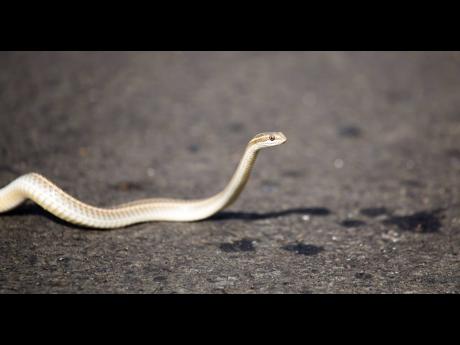
Pythons are famous for their extreme eating habits. They can swallow huge prey whole, then go months - even years - without eating, all while maintaining muscle mass.
Now researchers believe they've figured out how.
The study, led by the University of Colorado Boulder and published in Nature Metabolism, identified a molecule that appears to switch off hunger signals in the brain.
After feeding, pythons produce a compound called pTOS, which surged by around 1,000 times during digestion.
When tested on mice, it reduced appetite and triggered weight loss - without muscle loss or nausea.
Expert Leslie Leinwand said: "This is a perfect example of nature-inspired biology. You look at extraordinary animals that can do things that you and I and other mammals can't do, and you try to harness that for therapeutic interventions."
Current weight-loss drugs like Ozempic, Wegovy and Mounjaro are effective - but not perfect.
Up to half of patients quit within a year due to side effects, and as much as a third of weight lost can come from muscle.
Scientists hope python-inspired treatments could offer a gentler alternative.
The molecule appears to act on the hypothalamus - the brain's hunger control centre - and while it exists in humans, it's only found at low levels.
Jonathan Long of Stanford University said: "If we truly want to understand metabolism, we need to go beyond looking at mice and people and look at the greatest metabolic extremes nature has to offer."
Researchers have now launched a start-up, Arkana Therapeutics, to explore turning the discovery into real treatments.
And the potential doesn't stop at weight loss.
Pythons' ability to preserve muscle while fasting could even help tackle age-related muscle decline.
Leinwand added: "There's a lot more to be learnt."