Latest News


Haiti likely to dominate CARICOM summit
February 15, 2023
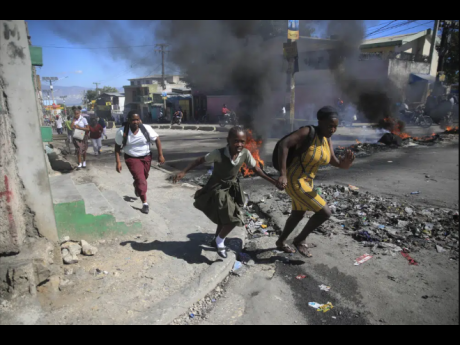
NASSAU, Bahamas, Feb 15, CMC – Bahamas Prime Minister Phillip Davis says Caribbean Community (CARICOM) countries have come to the realisation that they do not “have the resources to be able to deal with the Haiti problem ourselves” as the regional leaders prepare to hold talks with Canadian Prime Minister Justin Trudeau on the ongoing situation in the French-speaking CARICOM countries.
Heads of government from the 15-member regional grouping will begin their three-day summit with the ceremonial opening on Wednesday night (6.30 pm local) time with Trudeau due to arrive here later this afternoon.
“What we at CARICOM have come to appreciate is that we do not have the resources to be able to deal with the Haiti problem ourselves and we do need outside help. And we’re looking to the north, Canada, and the United States to come to the fold to help,” Prime Minister Davis told a news conference here on Monday evening.
“And it has to be a Haitian solution, not an American, Canadian or CARICOM solution. We’re here to help them find a solution,” said Davis, who is also the chairman of the regional integration grouping.
“We do not have the capacity, nor do we have the resources to effectively bring stability, none of our Caribbean countries, either individually or collectively, could achieve that without the assistance. Once we have identified assistance from abroad, we are prepared to do our part to ensure that stability is obtained,” he said ahead of the 44th Heads of Government Meeting that will be held at the Baha Mar resort.
” I think the international community is reluctant to intervene in the sense that we make it an international solution or it’s an occupation by the international powers. Rather, what we seek to have done is to stabilise the country sufficiently enough to allow for free and fair elections.
“The path and journey to that is where the challenge for us is what we need to be able to ensure that persons who wish to offer themselves for elected positions in the country to form a parliament, to form government, persons are able to reach and speak to citizenry, to sell their programmes, their initiatives, share the philosophy and vision for their country, free from intimidation, and fear of violence, etcetera.”,” Phillips added.
Haiti’s Prime Minister Dr. Ariel Henry has called on the international community, “especially those countries that can help” to support efforts to deal with the ongoing socio-economic and political situation in his country.
He said to deal with this situation, his administration urged the international community to participate in a specialised multinational force to help the Haitian security forces to fight against the proliferation of organised crime, the illicit trafficking of arms and ammunition, and eradicate the gangs that have held the country hostage.
United Nations Secretary General, Antonio Guterres reiterated his urgent appeal to member states to understand the urgency of acting quickly to support the solutions chosen by Haitian actors.
So far, Jamaica is the only CARICOM country that has said it is “willing to participate in a multinational security assistance deployment to Haiti” which is going through a period of political turbulence and economic and social difficulty, aggravated by a climate of insecurity fuelled by armed criminal groups.
Earlier this month, Jamaica’s Prime Minister Andrew Holness, who will be among the regional leaders meeting here, told his Parliament that his country’s security forces could be part of the initiative and the situation in the member CARICOM country is a source of worry for his administration and the entire region.
“The Government of Jamaica and indeed the people of Jamaica, even with our own challenges and concerns, are deeply concerned about the humanitarian and security crisis being experienced by our Caribbean neighbour and sister nation Haiti.
“The people of Haiti continue to have their human rights threatened by powerful gangs and militias which perpetrate heinous crimes including killings, kidnappings and acts of violence against women and children,” said Holness, noting that the situation in Port au Prince had escalated to dangerous proportions with the murder of several policemen recently.
On Tuesday, the Canadian government issued a statement in which it said Prime Minister Trudeau and United States Special Presidential Envoy, John Kerry, who is also due to visit Nassau, had expressed deep concern about the ongoing crisis in Haiti.
The statement said the two men discussed the situation in Haiti and “the importance of supporting regional actors.
“To this end, they looked forward to engaging with Caribbean leaders at the CARICOM Heads of Government meeting,” the statement said, adding “the Prime Minister and the Special Presidential Envoy discussed the ongoing political, humanitarian, and socioeconomic aspects of the crisis in Haiti.
“They reaffirmed their commitment to work together to support Haitian-led solutions, promote dialogue toward democratic elections, and enhance Haiti’s effective law enforcement capacity.
“The Prime Minister talked about the importance of coordinated sanctions to pressure those responsible for the ongoing violence and instability in Haiti, and disrupt the flow of weapons to criminal gangs in Haiti.
“Prime Minister Trudeau and Special Presidential Envoy Kerry looked forward to speaking more about this issue in the coming days,” the statement added.
Asked by reporters whether it would be safe for CARICOM officials to travel to Haiti, Prime Minister Phillips replied “I don’t know that we are afraid to travel to Haiti. But the question is, the instability that continues to persist does not make anyone feel safe in Haiti”.
The Bahamas had recently recalled its diplomatic staff from Port au Prince, but the CARICOM chairman acknowledged that “things are settling and are now considering whether we’ll send them back”.
Davis told reporters that the CARICOM summit will also discuss the issue of illegal migration “that impact all of our countries in respect to irregular and sometimes more likely dangerous migration of persons who are impacted by the challenges within their own jurisdictions”.
CARICOM Secretary-General Dr Carla Barnett, who was also at the press conference, told reporters that the summit will also address other issues including food security, climate change and the ongoing COVID-19 pandemic.
“All of our systems are indeed under stress because of the diversion of resources from other kinds of provision of health services to dealing with the COVID crisis since 2019. So, we’re going to be having that conversation led by CARPHA (The Caribbean Public Health Agency),” she said.
We want to hear from you! Email us at star@gleanerjm.com and follow @thejamaicastar on Instagram and on Twitter @JamaicaStar and on Facebook: @TheJamaicaStar, or on Whatsapp @ 876-550-2506.