Latest News


Hell in Haiti - Gang violence erupts as thousands escape country’s two largest prisons
March 05, 2024

PORT-AU-PRINCE, Haiti (AP):
Authorities in Haiti have ordered a night-time curfew after an explosion of violence when gang gunmen overran the two biggest prisons and freed thousands of inmates over the weekend.
A 72-hour state of emergency began Sunday night. The government said it would set out to find the killers, kidnappers and other criminals who fled.
"The police were ordered to use all legal means at their disposal to enforce the curfew and apprehend all offenders," said a statement from Finance Minister Patrick Boivert, the acting prime minister.
Gangs already were estimated to control up to 80 per cent of Port-au-Prince, the capital. They are increasingly coordinating their actions and choosing once unthinkable targets like the Central Bank.
Prime Minister Ariel Henry travelled abroad last week to try to salvage support for a United Nations-backed security force to help stabilise Haiti in its conflict with the increasingly powerful crime groups.
Haiti's National Police has roughly 9,000 officers to provide security for more than 11 million people, according to the UN. They are routinely overwhelmed and outgunned.
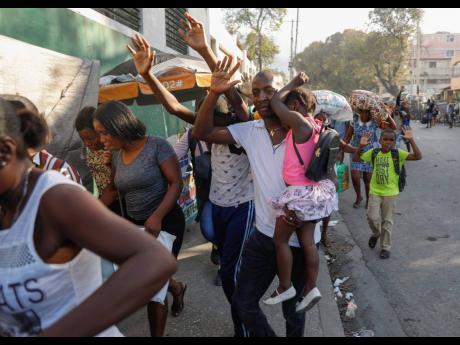
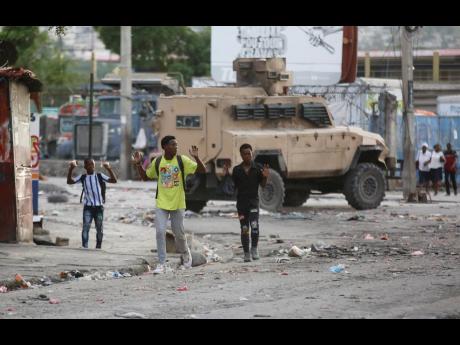
The deadly weekend marked a new low in Haiti's downward spiral of violence. At least nine people had been killed since Thursday - four of them police officers - as gangs stepped up coordinated attacks on state institutions in Port-au-Prince, including the international airport and national soccer stadium.
But the attack on the National Penitentiary late Saturday shocked Haitians who are accustomed to living under the constant threat of violence.
Almost all of the estimated 4,000 inmates escaped. Three bodies with gunshot wounds lay at the prison entrance Sunday.
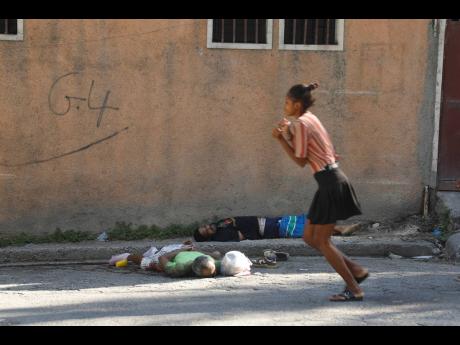
In another neighbourhood, the bloodied corpses of two men with their hands tied behind the backs lay face down as residents walked past roadblocks set up with burning tyres.
Among the few dozen people who chose to stay in prison are 18 former Colombian soldiers accused of working as mercenaries in the July 2021 assassination of Haitian President Jovenel Moise.
"Please, please help us," one of the men, Francisco Uribe, said in a message widely shared on social media. "They are massacring people indiscriminately inside the cells."
Colombia's foreign ministry has called on Haiti to provide "special protection" for the men.
A second Port-au-Prince prison containing around 1,400 inmates was also overrun.
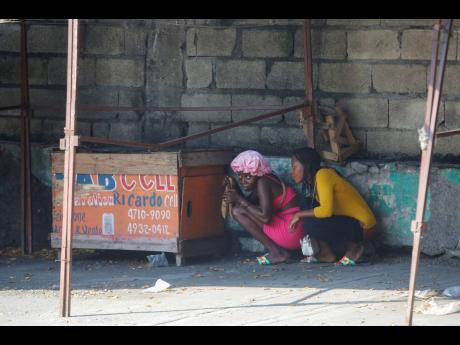
Gunfire was reported in several neighbourhoods in the capital. Internet service for many residents was down as Haiti's top mobile network said a fibre optic cable connection was slashed during the rampage.