Latest News


Dog leads therapy care at children’s hospital
January 04, 2024
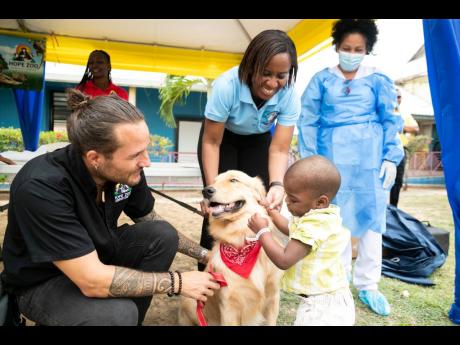
When Dr Teddy Barks is on duty at the Bustamante Hospital for Children (BHC) you can feel the excitement of the children, see their wide smiles and, for a moment, many temporarily forget their surroundings as they embrace him.
Dr Teddy Barks is a golden retriever that is part of the Animal Assisted Recovery Care (AARC) pilot project, which was launched at the hospital last March. The animal is owned by the BHC and cared for and maintained by the Hope Zoo.
All other animals, including a snake, birds, rabbits and kittens, are from the Jamaica Society for the Prevention of Cruelty to Animals, the Hope Zoo, and Montego Bay Animal Haven.
The multidisciplinary, collaborative effort was launched in March as part of the hospital's 60th anniversary celebrations.
The AARC pilot is proving to be beneficial to the participants and receiving positive feedback from all stakeholders.
Under the project, there are monthly interactions and educational sessions with pre-selected patients and the animals. Each session is held with an average of eight patients. Parents and staff also benefit from additional visits and interactions with the animals.
Programme coordinator Dr Marsha James is happy with the project so far. The ear, nose and throat (ENT) consultant said she hopes that it will continue. The 18-month pilot is now at the six-month mark and is due for evaluation.
She notes that the children were initially cautious, "but with the help of our stakeholders, they are educated about the animals, and with time, they have become much more interactive".
James says parents actively support the initiative, engaging with the animals during sessions. A survey reveals that Dr Teddy Barks, the therapy dog, is the overwhelming favourite among participants, followed by the snake. James notes that the target group for this form of therapy is children age four to 12 who can follow instructions. Younger children are also involved, supported by their parents in less interactive sessions.
Older patients in the programme have the opportunity to hold animals, offer treats, take dogs for walks, and interact with various animals, including the snake.
James emphasises that the primary goal of animal therapy is to foster a human-animal bond, alleviate anxiety, improve cardiovascular outcomes, and enhance mental health.
The programme is particularly beneficial for children undergoing extended hospitalisation, offering them a chance to socialise, create bonds, and experience positive interactions with animals, countering potential trauma from being isolated from family, friends, and pets at home.